
This is intentionally raw: part brainstorm, part manifesto, part lived-in creative direction. If your brand needs another sanitized content plan, this may not hit. If you believe every business, niche, and sector needs real storytellers, visionaries, and artists right now — especially in the age of AI — keep reading.
If your brand’s story and efforts suck, here’s an ad-libbed three decades’ worth of honest storytelling and marketing experience from a professional and human creative perspective no one on earth is going to share with you:
I’m revealing, unfiltered by AI, an impromptu manifesto for brands and people to adapt to what real magnetic storytellers need in order to propel a brand forward in the face of AI, a noisy world, and a people’s fragmented psyche.
Blending technical and creative, left brain and right brain approaches, here are some of the secrets you need to know… if you can keep up. If not, DM or comment below for discourse.
The Secrets
#1. Everything is Frankenstein’d and analog first, automation second.
#2. All the rules exist to be broken, in every medium and every possible format — including the meta of your format. Learn the meta, break the meta, create the meta, live the meta.
#3. Risk it for more than sensationalism or buzzworded titles; show, don’t tell.
#4. Your digital footprint and “brand” is a mass that creates gravity, so warp the fabric of algorithms.
#5. The secret is culture (+ craft, community, collaboration, curiosity). That’s where you derive intent and scripts/copy from. C5.
#6. Don’t fight Mother Nature. We’ve evolved to detect BS. Explore it curiously and furiously, with respect.
Acting, Story, and Happy Mistakes
In acting, where you, quite literally, must be open to knowing, learning, and feeling adaptive to anything as a vessel for the story and bigger picture, the story does always come first.
You’re told you must learn all the rules, and then have the wherewithal to know when and how to break them — both purposefully and sometimes for the joy of the risk.
Happy mistakes are the most human moments, where, for only a single take, something happened spontaneously, capturing the magic. Never to be duplicated, replicated, or fabricated again.
By the same token, one of my mentors and true artists I look up to used to say that “to be a good actor, you have to be an even better person.” Shoutouts to Dimiter Marinov, a true thespian, friend, person, artist, and storyteller.
It took me quite a while to understand, not what it meant, but how to apply it as an individual — let alone for a business and brand — not just artistically, but inherently in life.
It meant “be full.” Be open. Be a real fucking person. Have an opinion. Have humanity. Have flaws. Be perfectly imperfect. Be willing to crave life itself.
Sanitized Brands Remove Their Own Essence
What I’m alluding to and simultaneously understating is that with everything so sanitized, fake, polished, optimized, calculated, workflow-structured, etc., you remove the very cornerstone of yourself and, by extension, your story.
For brands, that’s your essence.
That’s your story.
That’s your culture.
Your humanity and story — the brand depth and breadth — stems from your very history, personality, flaws, and experiences.
How on earth can your client or community feel compelled through generic shit in a world of AI? You’re not moving me or taking me on a journey through experiencing your product, or showing how your service is a journey for a specific group.
Instead, we use vanity metrics, ego-driven highlights, and repelling gimmicks.
The Camera Never Lies
In acting, we say “the camera never lies” for a damn good reason.
In writing, we acknowledge that you shouldn’t pander or cater to an audience because they’ll read right through a spoon-fed story.
These days, your audience is far smarter than ever before. Every niche I’ve ever touched — gaming, media, academia, collectibles, sports, tech, business, healthcare, misc. markets, etc., etc., etc. — has all been so desperately managed to the point of diminishing marginal returns being deeply problematic for the end user.
Your storytelling and brand require more than bullshit KPIs you poorly misattribute and use as justification for a poor campaign, a failed marketing experience, or a lame “authentic” token story ad.
If everyone is really as “human” and “people-first” as they claim they want to be, then what the hell is stopping you from persistently being exactly that… human?
And yes, that includes a brand.
People struggle to codify what a brand really is because it’s different for each and every person and, yet, is somehow the same.
A brand is simply you.
Who are you?
That’s who and what people get to know, if and when you let them, of course.
A business entity is nothing more than a construct reflecting someone’s story and efforts to interact with someone else. Business nerds can groan at the thought of B2B, B2C, or D2C being more than transactional models.
My recommendation: shut the fuck up and actually connect.
Spoiler: it’s not your “marketing” or branding that sucks.
Your storytelling sucks because of a psychological inability to resonate from peer to peer in a myriad of ways.
You think Charlie Chaplin needed recorded dialogue to communicate a timeless comedic moment? Do memes always need context for you to get the joke or allusion?
You — and your brand — lack character, enriched with all the traits a person would have.
Beyond dynamic, rounded, and evolving character, the story your audience — ICP, avatar, buying groups — requires to empathize or resonate with needs something to latch onto apart from generic pop culture shit or simple functional value that addresses their pain points.
Brand Story as Character Work
Learning to act required me to take a scalpel to every script/copy, every beat, every scene, and empathize with the perspective of a character without judging them, while simultaneously empowering their want — their objective — in a justifiable manner.
Time and time again, I get to see behind the curtain of brand stories and am dumbfounded by how lost their characters, story, and intent are.
Garbage writing.
While the sides — aka script/copy — are the source of truth, they’re only part of the equation to understand both intent and how that intent will impact the end viewer: users, audiences, communities.
I’m incredibly dogmatic and judgmental, with an innate hyperanalytical approach to everything, everywhere — all at once. But that’s the part I shelf every single time I’m on a set, regardless of whether I’m in front of or behind the camera.
A multibillion-dollar brand I was on multiple sets for not long ago struggled to capture a story about how their product and service really impacted the day-to-day of its intended audience.
On set, it was flat, boring dialogue a novice across any creative sphere could have thrown together — and yes, including AI.
I sat there and, within five minutes, dissected the script to give it that energetic punch, the momentary silence in certain beats, and the figment of a character that people could see.
Not only as the performer, but also as a writer who could mentally self-direct and see the intent of the brand’s offer, and how it feels for a person to be exposed to the pain without that service, subsequently followed by the relief and mental/emotional hurdles the audience — the camera — would follow us through.
A soft example, sure, but it illustrates that your story needs to feel the room, the epic journey, and the internal friction a person would succumb to under that context.
I found that culture by feeling their tools, their building, their staff, their users’ comments, their reviews, their very nature.
It’s relational — built on a foundation of relationships that a unique person or entity facilitates.
Or, to borrow the simplified Einstein riff: it’s all relative.
See? We’re already encroaching on the science of the universe when all we’re talking about is story and culture.
Over two decades of time spent internationally and in the States, plagued by pure capitalism on one side and survivalist needs on the other, I can’t help but recognize that right now, more than ever, your brand’s propensity to actually unfold in a meaningful way for the people you say your brand represents is directly correlated with its willingness to adapt to preserving humanity within your niche, within your story, within your culture.
If you lack culture, you will lack the foundation required to resonate.
Where Is Your Culture?
In a country so deeply rooted in assimilating the cultures of the world, how is it that we’ve come to what feels like a callous, sterile, and numb experience for everyone and everything?
Where is the culture?
Where is your culture?
And more importantly for businesses, where is your brand’s culture?
Please, for the love of God, don’t give me your bland mission statement and “we’re a family” crap about your brand and business story because I’m willing to bet endless groups of individuals who aren’t there anymore, for one reason or another, would vehemently disagree with your corporate theatricality.
If your culture inside is fake, how can you possibly expect what you project to not be a carbon copy of that fakeness?
Good stories? They are few and far between. Luckily, we’re seeing a shift in this originality thanks to a select few daring cats out there. But generally, things are so routine.
However, if you don’t give a shit about the person or industry/sector you’re serving — genuinely, unapologetically, and fully — then how on God’s green earth am I supposed to think this isn’t about anything other than your capitalist gain?
If that’s what it’s all about, no wonder most brands and stories come off as commodities, not legacies.
I grew up bombarded by several languages, between multiple cultures, ethnic groups, discriminatory behavior, survivalist chaos, and quickly became attuned to assimilate everything out of necessity. Not the least of which, however, was people and their stories.
A true multicultural Frankenstein: linguistics, slang, hobbies, traditions, values, rituals, reverence, irreverence, nature, materials, struggles, perseverance, tolerance, corporate theatricality, community rawness, bootstrap stuff, and more.
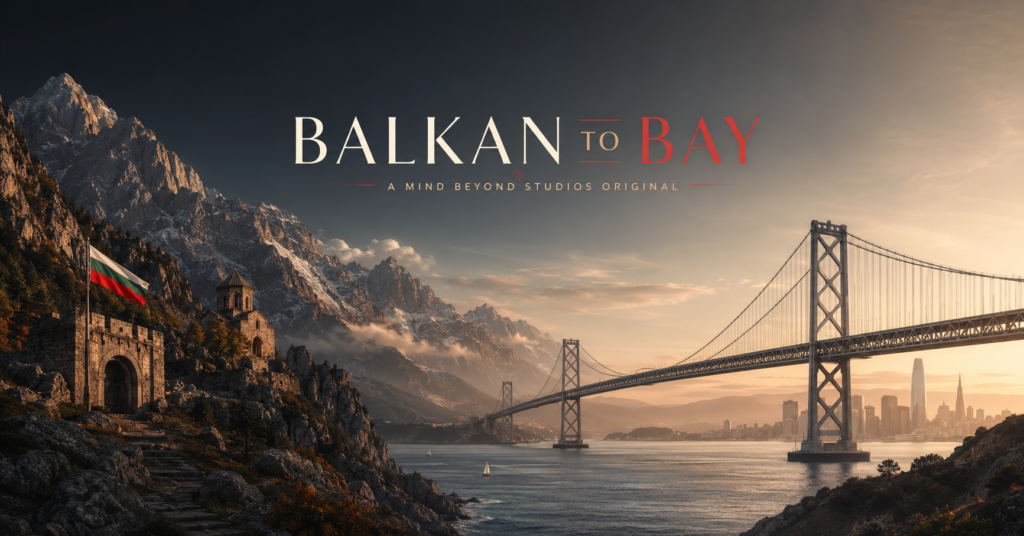
From the Balkans to the Bay
From the deep-rooted culture of village folklore from the Balkans, to the fiery swag of the Bay Area, and everything in between across human disciplines, it never ceased to amaze me that the one outlier in every single story was the very culture that emerges from people’s willingness to put people and humans first.
Just like in acting, you put your scene partner first and, through them, navigate the beats of the scene, the arc of the act, and the emotional payoff of the story.
We’ve forgotten the payoff, or rather confused it with numbers and superficial deductive and inductive analyses.
The Throughline Between Pain Points and Outcomes
In marketing, the best of the best look for that throughline between “pain points” and “outcomes” that stems from movies, from filmmaking, from real stories, real journeys.
The greats, however, let the story come to them. You can’t always plan how and when.
You think the greats are only following a shot list?
You can game plan all your marketing based on comparative analysis, archetypes, models, and more, and still have no fucking clue how to demonstrate your familiarity with an audience’s pathos, logos, and ethos.
I can walk onto a set or project at this point in my life and instantly feel a winning strategy and story from a dogshit one because of sheer experience, yes, but more than that, because of my ability to echo the culture of a community, a peer, a cutting-edge technology, or an archaic mousetrap solution.
That’s why there’s nothing more powerful than a gripping, magnetic testimonial, a jaw-dropping confessional from a founder, an interactive community initiative, or a flawed and gritty live demo.
Sometimes it’s fictional, sometimes it’s nonfictional. Sometimes it’s narrative, other times it’s sporadic, nonlinear game-winners.
It’s all about the human now.
Take every medium, every format, every tool, and every model, every robotics fantasy we can automate, and you still won’t have the sway of a people’s culture without humanity in your story that directly ties to the here and now.
The best marketers are never “marketers.” They’re real people with a real vision and a real pulse on things.
They can actually vibrate at the necessary operational and creative frequency of that culture to channel it through the creative medium.
As we say in film and acting, they’re the “grounded” ones.
So how do you cultivate culture and ground your brand and its tactical approach to a fleshed-out archetype and stable ecosystem so it can thrive?
You want to take your brand to the cosmos without having the footing to be grounded in the first place for what matters.
Screaming Into the Noise Is Not Culture
Is it just pollinating and disseminating endless organic posts, ads, livestreams, webinars, events, promos, blah blah blah across endless platforms and screaming into the pits of surrounding noise using optimization tactics?
Is it really hoping something just sticks and then you can’t address what it is?
What even is culture, broski, and how the heck can I develop it?
If I can’t feel the journey of your product or service as a result of those things from the long-term campaigns as a person and human, then prepare to fall into oblivion thanks to AI overlord slop.
There’s a reason why human-first brands will significantly matter more, because the taste, emotional resonance, and meaningfulness outweigh and transcend those “captivating” marketing efforts.
The Human Element
Almost three decades removed from living back home under a peaceful, euphoric Balkan mountain, I never once lost my culture and humanity.
My taste for it.
My curiosity.
Sure, I neglected parts I’m working toward now — much like a deficient brand — in lieu of absorbing a richer multicultural experience once I moved to the States.
But here comes the internet Wild West to open my eyes to infinite possibilities, infinite people, infinite cultures… and more recently AI models with all the potential… in an otherwise aimless endgame and moving goalposts for everyone.
Every brand narrative, community event, promotional experience, and innovative market all needed to go through these hands and be infused with a human spirit.
A different perspective.
A human element.
A lived-in experience someone could simply relate to from their device.
I had the luxury of growing up in a time where I could work with resourceless, scrappy startups to literal billion-dollar brands experimenting and innovating the balance of platform usage as a medium with the actual presence of a brand — which is literally just the audience and person your hopefully-not-too-generic mousetrap of a product/service appeals to.
Audiences aren’t stupid.
Everyone grows up on a screen now, and that real estate and noise we feel day in and day out is a real damn drag.
Tell me how I can interact with you beyond just using your stuff, integrating it, or whatever else.
Build that foundation by having a fully fleshed-out story, to impact, to compelling ecosystems that reflect why you matter.
Why do I care?
It’s exhausting feeling like you can’t get away from the same fodder and typical stuff over and over and over.
One Word Solves This: Culture
One word solves all this: culture.
Build a fucking culture around your shit.
Culture is what creates stories and brands and real compelling messages that your audience will inevitably gravitate toward.
Stop chasing an ever-changing algorithm and interest-based model when you can literally just craft culture for your communities through curiosity and collaboration.
Culture + Craft + Community + Collaboration + Curiosity.
The C5 Framework: How to Actually Build Culture Around Your Brand
Food for thought is cute, but brands need something to do with it. So here’s the simple version.
1. Culture: Define the world your brand comes from
Don’t start with a slogan. Start with the lived reality.
Ask:
- What world, community, niche, struggle, tradition, or belief system does this brand actually come from?
- What do our people care about that outsiders usually miss?
- What do we refuse to fake?
Output: a clear cultural point of view, not a bland mission statement.
2. Craft: Show the work, not just the claim
Culture without craft is cosplay.
Ask:
- What do we do unusually well?
- Where does our taste show up?
- What proof can people see, hear, feel, or experience?
Output: founder stories, demos, behind-the-scenes proof, testimonials, case studies, product rituals, and process content that actually show competence.
3. Community: Put the scene partner first
Your audience is not a spreadsheet. They are the scene partner.
Ask:
- Who are we really serving?
- What emotional journey are they already living through?
- How do we make them feel seen before we ask them to buy?
Output: content and experiences that reflect the audience’s real language, pain, humor, rituals, objections, and aspirations.
4. Collaboration: Let the culture talk back
A brand should not just broadcast. It should host, invite, remix, and respond.
Ask:
- Who can we create with instead of merely market at?
- What customers, creators, experts, employees, or partners should be part of the story?
- Where can we turn testimonials, conversations, events, and feedback into living proof?
Output: community-driven campaigns, customer stories, founder conversations, live demos, partner spotlights, and collaborative media.
5. Curiosity: Keep evolving without losing the root
Culture is alive. If you freeze it, you kill it.
Ask:
- What are we still learning from the people we serve?
- What is changing in the culture, market, technology, or medium?
- What should we test without betraying the brand’s essence?
Output: an adaptive content ecosystem that evolves with the community instead of chasing every algorithmic trend.
The Point
C5 is not a content calendar.
It’s not a marketing gimmick.
It’s a way to make your brand feel alive again.
Culture gives you the foundation.
Craft gives you proof.
Community gives you resonance.
Collaboration gives you momentum.
Curiosity keeps it from going stale.
That’s how you stop making disposable content and start building gravity.
The Contentification of culture demands you respect yourself enough to be willing to vulnerably, truthfully, and fully experience the catharsis of a good story beyond your hooks, CTAs, blogs, and videos. I can assure you that your community, team, stakeholders, and history…will thank you.
And, most importantly, let the innocence of your story permeate every layer of your brand, every momentary interaction and touchpoint with relentless conviction.
CUT. END SCENE.
Written by: Alexander Intchovski
“will the real ‘ai’ please stand up?”
If your brand’s soul and spirit needs more than disposable content — founder stories, testimonials, brand authority films, creative direction, or a culture-first content system — reach out to Mind Beyond Studios.
Let’s build something with gravity.

Leave a Reply